
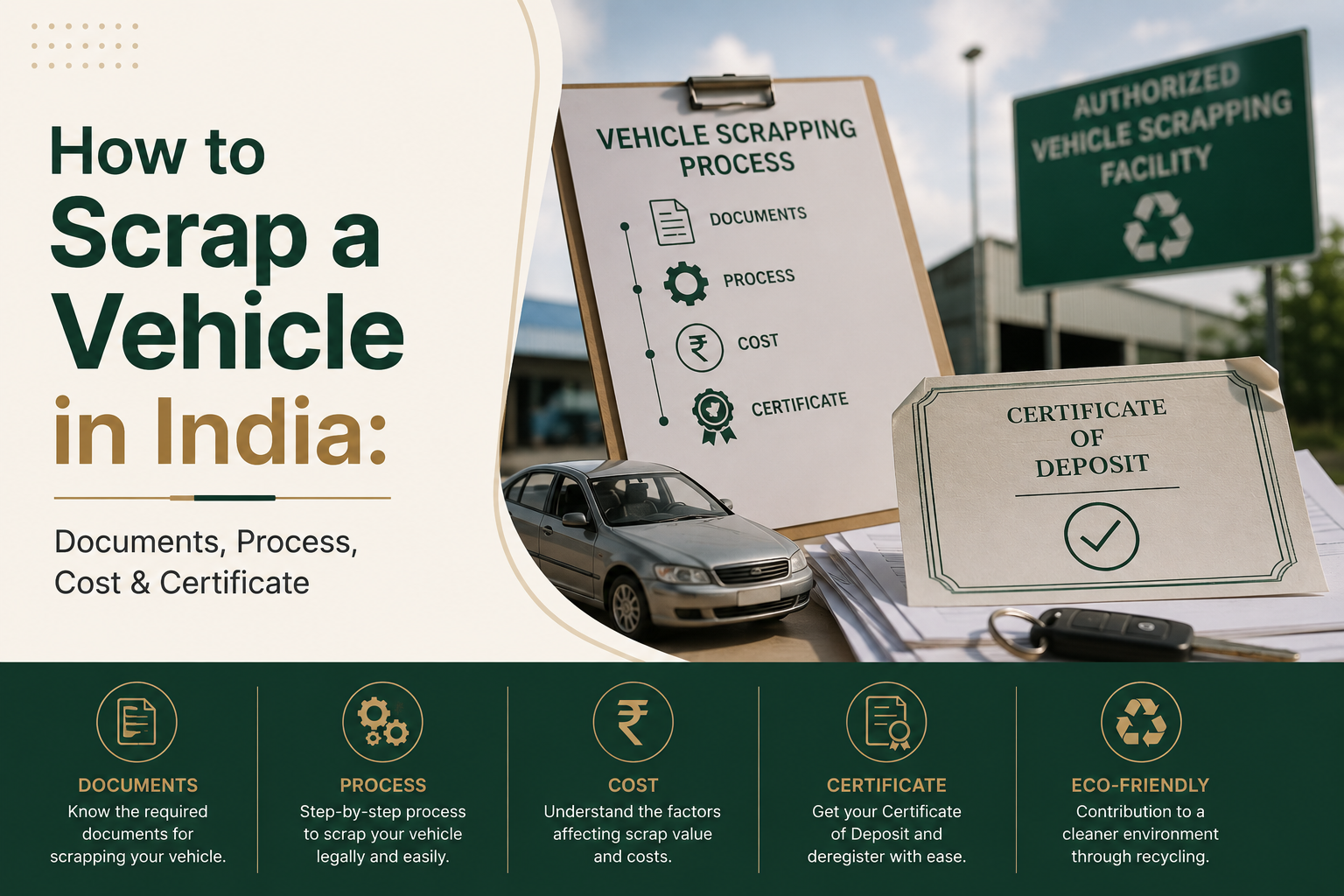
Most people only look into scrapping a vehicle once it’s sitting unused – a failed fitness test, lapsed registration, or a car not worth repairing. Plenty of facilities will take it, but only an authorised one changes what you get back and how clean the paperwork is afterward.
When Is a Vehicle Eligible for Scrapping?
A vehicle qualifies if it fails its mandatory fitness/emission test, or crosses its age threshold – 15 years commercial, 20 years private under the central policy (Delhi applies stricter limits: 10 years diesel, 15 petrol). Structural accident damage can also disqualify a vehicle from a fitness certificate even after repair.
Did You Know? As of March 2023, over 11,000 vehicles – including 7,750+ private vehicles – had been scrapped through RVSFs, per Road Transport Minister Nitin Gadkari’s statement in the Lok Sabha, with 64 RVSFs open at the time. (Source: Deccan Herald)
Choosing a Reliable, Authorized Dealer
Only a Registered Vehicle Scrapping Facility (RVSF) can legally scrap your vehicle and issue a Certificate of Deposit (CoD). An informal dealer can only dismantle it for parts. Before handing over your vehicle, ask: Is it a registered RVSF? Can it issue a CoD? How will registration be cancelled, and what documents will you get back? How is scrap value calculated, and how are fuel, oil, and batteries handled during dismantling?
Global Scrappage Yards is a registered RVSF; you can also see how the process works and read about their environmental impact practices.
Documents You’ll Need
- Original Registration Certificate (RC)
- Owner ID proof (Aadhaar, PAN, etc.)
- Insurance details, even if lapsed
- PUC certificate, if available
- Loan NOC, if the vehicle was financed
- Authorization letter, if someone other than the RC holder is handling the handover
If the RC is lost, most RVSFs can proceed with a duplicate RC or affidavit – flag this early to avoid delays.

Vehicle Scrapping Process in India: Step-by-Step
- Document & identity verification – RC, ID, ownership checked against the vehicle.
- Inspection and valuation – weight, materials, condition, plus chassis/engine number checks.
- Pickup or drop-off.
- Deregistration filing – RC cancellation submitted through the transport department.
- Dismantling and recycling – fluids and hazardous parts removed first, then systematic dismantling.
- Certificate of Deposit issued through the government portal.
What It Actually Costs
There’s no fixed rate – value depends on weight, materials, condition, and fluctuating scrap metal prices. As a reference point, scrap value has typically worked out to around 4–6% of a comparable new vehicle’s ex-showroom price.
The bigger number is usually what the CoD unlocks: many states offer a road tax rebate of up to 25% on your next personal vehicle (15% commercial), the new vehicle’s registration fee is often waived, and some manufacturers add their own discount. These vary by state and manufacturer – confirm current terms with your RTO or dealership.
Expert Insight: The most common misjudgement isn’t about price – it’s assuming scrap value is the only benefit. The tax rebate and registration waiver are often worth more than the scrap metal itself, but only with a CoD from a registered facility.
Why the CoD Matters
It’s the document that closes the loop – without it, your RC can stay technically active, creating problems if the vehicle is later linked to an unpaid challan, accident, or tax notice. An unregistered dealer cannot issue this certificate, no matter how the deal is priced.

Common Mistakes to Avoid
- Not confirming RVSF status before handover – no registration means no CoD.
- Skipping photos of the vehicle and number plate for your own records.
- Focusing only on scrap price, ignoring the tax/registration benefits tied to the CoD.
- Not getting the valuation in writing, or clarifying pickup charges and CoD timeline upfront.
- Not flagging RC or loan issues early if the RC is missing or the vehicle is financed.
Read more about how Global Scrappage Yards operates or check the FAQs page before reaching out.
Bottom Line
Confirm the facility is a registered RVSF, keep documents ready, understand what the CoD unlocks, and don’t hand over your vehicle until you’re clear on the certificate timeline. Get those basics right and the rest is straightforward.
Explore Our Scrapping Services
FAQs
1. What is a scrap vehicle under Indian law?
A vehicle that has failed its mandatory fitness test or crossed its age threshold (15 years commercial, 20 private) without a valid renewed certificate.
2. Who can legally scrap a vehicle in India?
Only a government-registered RVSF can legally scrap a vehicle and issue a CoD.
3. What documents do I need?
RC, owner ID proof, insurance details, PUC certificate if available, and loan NOC if financed.
4. How much money will I get?
Depends on weight, material, and condition – roughly 4–6% of a comparable new vehicle’s ex-showroom price.
5. What is a Certificate of Deposit (CoD)?
The official document an RVSF issues confirming permanent deregistration and scrapping.
6. What tax benefits do I get?
Up to 25% road tax rebate for personal vehicles (15% commercial) on your next purchase, plus a registration fee waiver, with a valid CoD.
7. Can I scrap a vehicle without the original RC?
Yes – a duplicate RC or affidavit works, with a few extra steps.
Leave a Reply